
Solar panels need more than sunlight to produce reliable energy. They also need a strong, accurately designed support system that can withstand outdoor conditions for many years. Ground Mounted Solar Structures provide this foundation by securing photovoltaic (PV) panels above the ground at the correct angle and position.
For commercial properties, industrial facilities, agricultural land and larger solar installations, a ground mounted solar structure can provide greater flexibility than a rooftop system. The structure can be designed around the available land, panel layout, soil conditions, wind exposure and required solar orientation.
In Lahore and other parts of Pakistan, choosing the right solar panel mounting structure is particularly important because outdoor installations are exposed to heat, dust, rain, seasonal winds and long term corrosion risks. A properly engineered structure helps protect the solar investment while making installation, maintenance and future expansion easier.
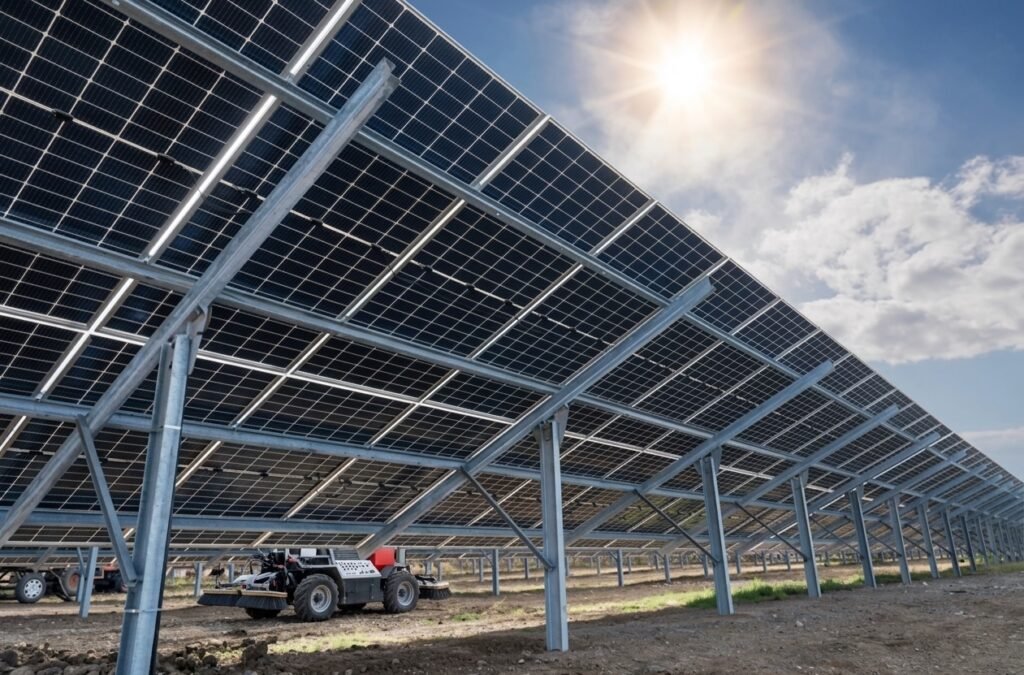
What Are Ground Mounted Solar Structures?
Ground Mounted Solar Structures are engineered frames installed directly on or into the ground to support solar panels. Instead of attaching photovoltaic modules to a building roof, the panels are installed on a dedicated structural framework supported by foundations, piles or other suitable anchoring systems.
A typical ground mounted solar structure includes steel or aluminium members, module rails, columns, braces, fasteners and foundations. The final design depends on the size of the solar array, panel dimensions, site conditions, wind loads, soil characteristics and required tilt angle.
For larger commercial and industrial projects, ground mounting can be especially useful when sufficient open land is available or when the existing roof is unsuitable for supporting a large PV system.
Why Are Ground Mounted Solar Structures Important?
The mounting system is one of the most important physical components of a solar installation. Solar panels may have long service lives, so the structure supporting them must also be designed for long term outdoor exposure.
A properly engineered solar panel mounting structure can help:
- Maintain the required panel orientation and tilt.
- Provide structural stability against wind and environmental loads.
- Keep panels at an appropriate height above the ground.
- Improve access for cleaning and maintenance.
- Protect the PV array from unnecessary movement or structural stress.
- Allow better planning of large commercial and industrial solar arrays.
The structure should not simply be selected according to panel quantity. It needs to be matched to the actual project conditions.
How Do Ground Mounted Solar Structures Work?
A ground mounted solar structure transfers the weight of the solar panels and the forces acting on them into the supporting foundations and ground.
The basic process begins with a site assessment. Engineers consider the available land, terrain, soil, drainage, shading, panel arrangement and environmental exposure. The structural layout can then be developed according to the project’s requirements.
The solar modules are attached to rails or supporting members, while columns and braces provide the necessary rigidity. The foundations hold the structure securely in place.
For a professional installation, the structure, foundation and connection details should be considered as one complete engineering system rather than as separate components.
Main Types of Ground Mounted Solar Structures
Different sites require different mounting approaches. The most suitable option depends on soil conditions, project scale, installation method and structural requirements.
Fixed Tilt Ground Mounting Structure
A fixed tilt ground solar mounting structure keeps solar panels at a predetermined angle. It is one of the most practical options for commercial and industrial solar projects because it has relatively simple construction and does not require moving mechanisms.
The tilt and orientation should be selected according to the project’s location, panel configuration, shading conditions and energy objectives.
Steel Ground Mounted Solar Structure
Steel is widely used for larger solar panel mounting structures because it provides high structural strength and can be fabricated according to project specific dimensions.
For outdoor applications, corrosion protection is an important consideration. Galvanized steel can provide additional protection against environmental exposure when appropriately specified and manufactured.
HDG Solar Mounting Structures
HDG solar mounting structures use hot dip galvanized steel to improve resistance against corrosion. This can be particularly valuable for outdoor solar projects where the structure will remain exposed to weather for many years.
However, galvanization alone does not replace proper engineering. Steel thickness, connections, fabrication quality, foundation design and site conditions also need to be considered.
Custom Ground Mounting Systems
Large commercial and industrial projects may require a customized solar mounting system rather than a standard frame.
Custom engineering can account for unusual terrain, different panel configurations, special clearance requirements, project expansion plans and specific structural loads.
What Materials Are Used for Ground Mounted Solar Structures?
Material selection has a direct impact on strength, durability, corrosion resistance and installation requirements.
Steel and aluminium are common choices for HDG Solar Structures in Lahore. Steel is often preferred for applications requiring substantial structural strength, while aluminium can provide a lightweight and corrosion resistant option for suitable applications.
A quality solar panel support structure should also use appropriately specified fasteners and connection components. The complete assembly matters not just the primary steel members.
For projects in Lahore, material selection should also consider outdoor exposure, dust, rain, humidity and long term maintenance requirements.
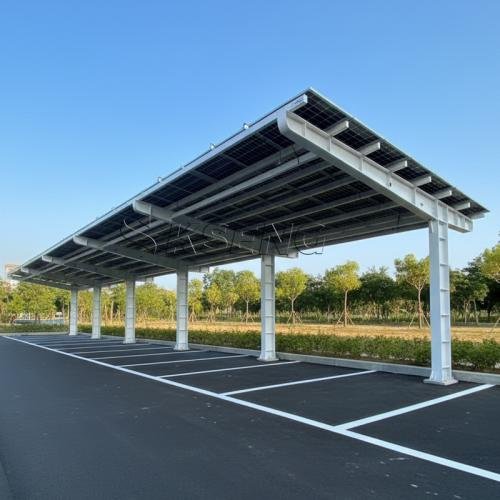
Ground Mounted Solar Structures in Lahore: What Should Be Considered?
Lahore has a growing demand for solar installations across residential, commercial and industrial applications. However, an open land solar project in Lahore should be assessed according to its specific site rather than using a generic structure design.
Several factors deserve attention:
Soil and Foundation Conditions
The foundation is critical because it transfers structural loads into the ground. Soil strength, depth, moisture conditions and site characteristics can influence the appropriate foundation solution.
A site with weak or variable soil may require a different approach from a firm, stable site.
Wind Loading
Ground mounted arrays have significant exposure to wind. The structure must be designed for the expected site conditions, including uplift and lateral forces.
Pakistan project specifications commonly address wind load requirements, galvanized components and proper structural anchoring for solar installations.
Drainage and Ground Slope
Water accumulation around foundations can create long term problems. Proper site grading and drainage should therefore be considered during project planning.
A suitable ground mounted solar structure should work with the site’s natural conditions instead of ignoring them.
Panel Tilt and Shading
Rows need to be arranged carefully to reduce unnecessary inter row shading. Panel tilt, row spacing and ground clearance should be considered together.
This is particularly important for larger solar arrays where poor layout can affect both energy production and maintenance access.
Benefits of Ground Mounted Solar Structures
Ground mounting can offer several practical advantages when the project has suitable land.
First, it provides greater flexibility in panel placement. Unlike rooftop systems, the design does not have to work around an existing roof structure, parapet walls or rooftop equipment.
Second, maintenance access can be easier. Cleaning, inspection and replacement work can be planned around accessible ground level rows.
Ground mounting can also be useful for commercial solar structures, factories, warehouses, agricultural properties and other sites where a large number of solar panels are required.
Another advantage is scalability. A properly planned site may allow additional PV capacity to be installed later, depending on available land and electrical infrastructure.
Ground Mounted vs Rooftop Solar Structures
The right option depends on the site.
| Factor | Ground Mounted | Rooftop Mounted |
|---|---|---|
| Available space | Requires suitable land | Uses existing roof |
| Structural dependency | Uses dedicated foundations | Depends on roof structure |
| Maintenance access | Often easier to plan | Depends on roof access |
| Layout flexibility | Generally higher | Limited by roof shape |
| Expansion | Can be easier with available land | Limited by roof area |
| Site assessment | Soil and foundations are important | Roof condition and loading are important |
For a factory, warehouse or large commercial property in Lahore, a ground mounted system may be worth considering when sufficient open land is available.
How Are Ground Mounted Solar Structures Installed?
A professional installation normally begins with site assessment and structural planning.
The project team first evaluates the land, solar layout, ground conditions and structural requirements. The foundation positions are then established according to the approved design.
After foundation work, the structural columns, rails, braces and other components are assembled. Solar modules can then be installed on the completed mounting framework.
Finally, the structure should be inspected to ensure that connections, alignment, stability and installation quality meet the project’s requirements.
At Arew Engineering Solutions, the approach is based on understanding project requirements, developing the design, fabricating the required components and completing delivery with attention to structural performance and project specifications. The company is based on SuaAsal Raiwind Road in Lahore and provides engineered solar mounting solutions for commercial, industrial and large scale installations.
How to Choose a Ground Mounted Solar Structure Manufacturer in Lahore
Choosing a supplier should involve more than comparing the lowest quotation.
Ask the manufacturer about the proposed material, structural design, corrosion protection, foundation approach, panel compatibility and installation process.
It is also useful to check whether the company can handle fabrication according to project specific requirements rather than supplying only standard frames.
For a Aluminum Solar Mounting Structures in Lahore, engineering capability, fabrication quality and communication are important because the mounting system needs to match the actual site.
Arew Engineering Solutions provides solar mounting structures in Lahore for commercial, industrial and large scale applications, including HDG and aluminium mounting solutions.
Why Engineering Matters in Solar Mounting Structures
A solar mounting structure is not simply a metal frame. It is a structural system that must carry panel loads while dealing with environmental forces over an extended period.
The correct solution depends on factors such as:
- Site conditions
- Soil and foundation requirements
- Panel dimensions and arrangement
- Wind exposure
- Tilt and orientation
- Material and corrosion protection
- Connection and fastening requirements
- Maintenance and access requirements
This is why a professionally engineered ground mounted solar structure can be a better long term choice than an improvised or undersized frame.
Ground Mounted Solar Structures
Ground Mounted Solar Structures provide a practical solution for solar projects where sufficient open land is available. They can be designed for commercial facilities, industrial sites, agricultural applications and large scale solar installations.
For projects in Lahore, the structure should be selected according to local site conditions, soil, wind exposure, drainage, panel layout and long term durability requirements.
Instead of choosing a structure based only on price, project owners should consider engineering, material quality, corrosion protection, foundation design and fabrication standards. A properly planned solar panel mounting structure can provide stable support for the PV system while making future maintenance and expansion more manageable.
If you are planning a commercial or industrial solar project in Lahore or elsewhere in Pakistan, discuss the site requirements with an experienced engineering and fabrication company before finalizing the mounting system. Contact Arew Engineering Solutions to discuss your solar mounting project
Frequently Asked Questions
What are ground mounted solar structures?
Ground Mounted Solar Structures are support frameworks installed on the ground to hold solar panels at a suitable angle and orientation. They are commonly used for commercial, industrial and large scale solar installations.
Are ground mounted solar structures suitable for Lahore?
Yes. Ground mounted solar structures in Lahore can be suitable where a project has sufficient open land and appropriate ground conditions. The final design should be based on the specific site, soil, wind exposure and solar layout.
Which material is best for a ground mounted solar structure?
Steel and aluminium are commonly used. For many outdoor applications, galvanized steel can provide a strong and corrosion resistant solution when properly engineered and fabricated.
How long do ground mounted solar structures last?
Their service life depends on material quality, galvanization or other corrosion protection, structural design, installation quality and environmental exposure. A professionally engineered system should be designed for long term outdoor service.
Do ground mounted solar structures require foundations?
Yes. The structure needs a suitable anchoring or foundation system to transfer loads safely into the ground. The appropriate foundation depends on soil conditions, project design and structural requirements.
Are ground mounted systems better than rooftop solar?
Not necessarily. Ground mounting is often advantageous when there is sufficient land and greater layout flexibility is required. Rooftop mounting can be more practical where land is limited.
Can ground mounted solar structures be customized?
Yes. Commercial and industrial projects can require customized dimensions, panel layouts, foundation arrangements, clearances and structural specifications. Custom fabrication can help match the structure to the actual project.
Where can I get ground mounted solar structures in Lahore?
Arew Engineering Solutions provides solar mounting structures in Lahore for commercial, industrial and large scale solar applications, with engineered and fabricated solutions based on project requirements.